


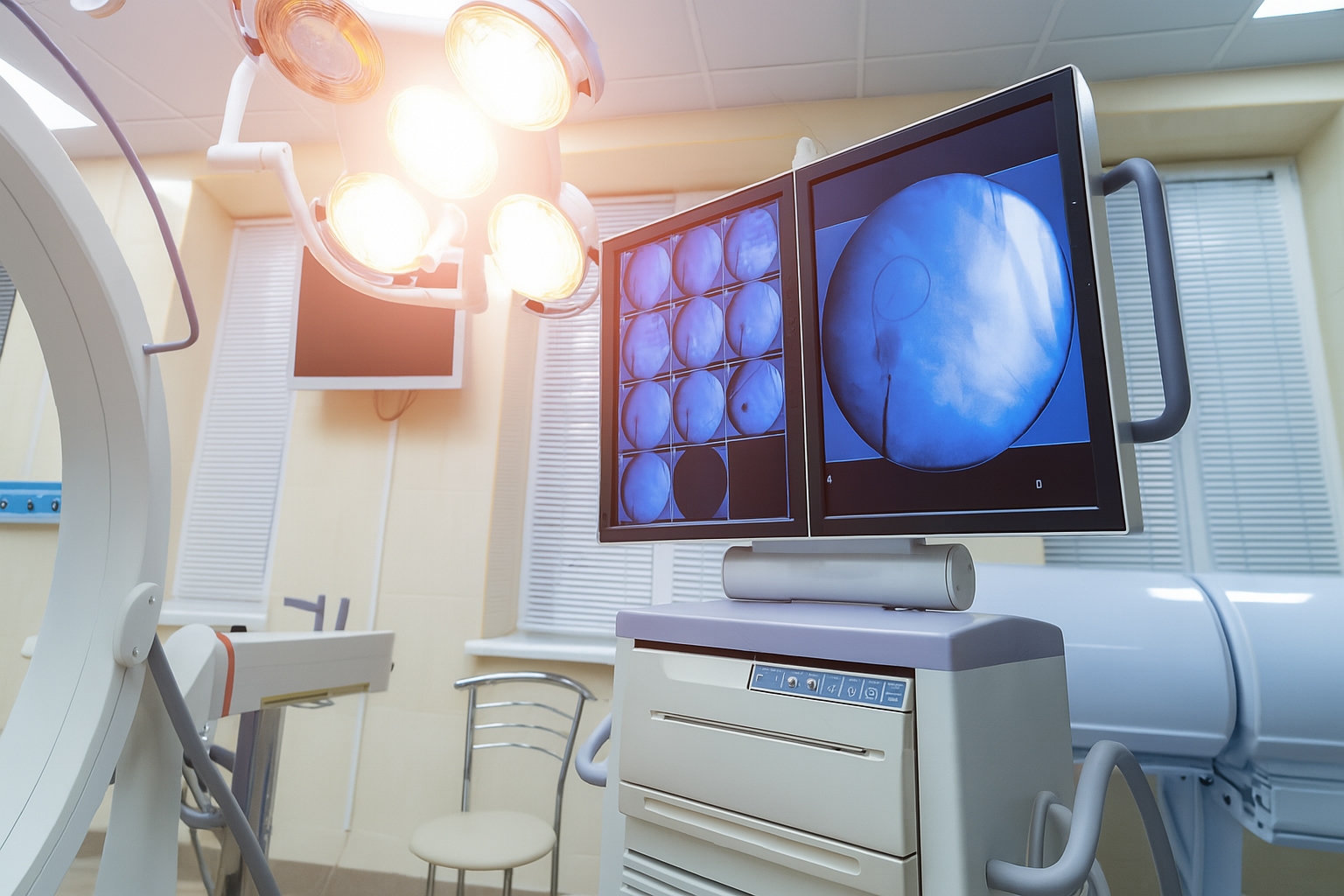
Interventional radiology (IR) is a specialized field of medicine that uses imaging guidance such as X-rays, ultrasound, CT scans, or MRI to perform minimally invasive procedures for diagnosing and treating a wide range of conditions. Unlike conventional surgery, IR typically requires only small or no incisions, leading to reduced pain, quicker recovery times, and a lower risk of complications
Key Features of Interventional Radiology:
1. Minimally Invasive Procedures
IR techniques are performed through small incisions or punctures, often using catheters or needles. This reduces trauma to the body and supports faster healing.
2. Image-Guided Precision
Advanced imaging tools like fluoroscopy, ultrasound, CT, and MRI guide the physician in real-time, ensuring high accuracy in targeting the affected area.
3. Reduced Pain and Scarring
Because procedures are less invasive, patients experience significantly less pain and minimal scarring compared to traditional surgeries.
4. Shorter Recovery Times
Most IR procedures allow patients to return home the same day or after a brief hospital stay, with quicker return to normal activities.
5. Lower Risk of Complications
Smaller incisions mean reduced risk of infection, bleeding, and other surgical complications.
6. Outpatient or Day-Care Friendly
Many IR procedures can be done without overnight hospitalization, making them more convenient and cost-effective for patients.
7. Broad Range of Applications
IR is used in various specialties—oncology, cardiology, urology, gastroenterology, and pediatrics—to diagnose and treat conditions like tumors, vascular diseases, and organ obstructions.
8. Alternative to Surgery
For many patients, IR offers a safe and effective alternative to conventional surgery, particularly when surgery poses higher risks.
9. Real-Time Monitoring and Adjustment
Imaging guidance allows real-time feedback, enabling the interventional radiologist to adapt and optimize treatment on the spot.
10. Personalized Treatment Approaches
IR procedures are tailored to the individual’s condition, anatomy, and medical needs, offering a more targeted and patient-specific approach.
Wide Range of Treatments:
It can be used for both diagnostic and therapeutic purposes, including:
- Biopsies (taking tissue samples for testing)
- Stenting (placing tubes to keep blood vessels open)
- Angioplasty (widening narrowed or blocked blood vessels)
- Drainage of abscesses or fluid collections
- Treatment of certain cancers (e.g., embolization to block blood supply to tumors)
- Varicose vein treatments (sclerotherapy, laser therapy)
- Uterine fibroid embolization (for non-surgical removal of fibroids)
Common Interventional Radiology Procedures:
1. Vascular Access (e.g., PICC Line, Central Line Insertion)
Placement of catheters into veins for long-term medication delivery, nutrition, or blood sampling—commonly used in cancer or chronic illness treatment.
2. Biopsy (Liver, Lung, Kidney, etc.)
Using imaging guidance (ultrasound, CT, or MRI) to safely obtain tissue samples from internal organs for diagnostic purposes with minimal discomfort.
3. Drainage of Abscesses or Fluid Collections
Insertion of a catheter to drain infected fluid or pus from the body, helping to resolve infections without open surgery.
4. Angiography and Angioplasty
Imaging of blood vessels (angiography) to identify blockages or narrowing, often followed by angioplasty—a procedure to open narrowed vessels using a balloon or stent.
5. Embolization
Blocking abnormal or bleeding vessels using tiny particles or coils—for conditions like tumors, arteriovenous malformations (AVMs), or gastrointestinal bleeding.
6. Tumor Ablation (Radiofrequency or Microwave Ablation)
Targeted destruction of tumors using heat or cold energy, typically in the liver, kidney, or lungs—done with precision through imaging.
7. Biliary Drainage or Stenting
Relieving bile duct obstructions (often from tumors or gallstones) by placing a drain or stent to restore bile flow.
8. Gastrostomy Tube Placement (G-Tube)
Insertion of a feeding tube directly into the stomach for patients who cannot eat by mouth, guided safely through imaging.
9. Ureteral Stenting and Nephrostomy
Treating urinary obstructions by placing stents in the ureter or drains into the kidney to restore normal urine flow.
10. Port Placement for Chemotherapy
Surgical insertion of a small device under the skin that allows easy access to veins for repeated chemotherapy sessions.
Advantages of Interventional Radiology:
1. Minimally Invasive
IR procedures use tiny incisions or needle punctures, reducing trauma to the body compared to traditional surgery.
2. Reduced Pain and Discomfort
Less invasive techniques generally result in less post-procedural pain, often eliminating the need for general anesthesia.
3. Faster Recovery
Patients typically experience shorter hospital stays and quicker return to normal activities, minimizing disruption to daily life.
4. Lower Risk of Complications
Smaller entry points mean reduced chances of infection, bleeding, and other complications associated with open surgery.
5. Improved Precision
Real-time imaging guidance allows interventional radiologists to precisely target the area of concern, enhancing both accuracy and safety.
6. Outpatient Possibility
Many IR procedures can be performed on a day-care basis, avoiding lengthy hospital admissions.
7. Cost-Effective
Reduced hospital stays, faster recovery, and avoidance of major surgery often make IR a more economical treatment option.
8. Versatility Across Specialties
IR can be used to diagnose and treat a wide variety of conditions in fields such as oncology, cardiology, urology, and pediatrics.
9. Preserves Future Treatment Options
Because it is less invasive, IR can often be repeated if needed, and doesn’t compromise future surgical options.
10. Better Quality of Life
With fewer physical side effects and a faster return to normal life, patients often report better overall satisfaction and comfort.
Interventional radiology is used in a broad array of medical fields, including cardiology, oncology, gastroenterology, and urology, and is increasingly becoming a first-line option for managing various conditions.