


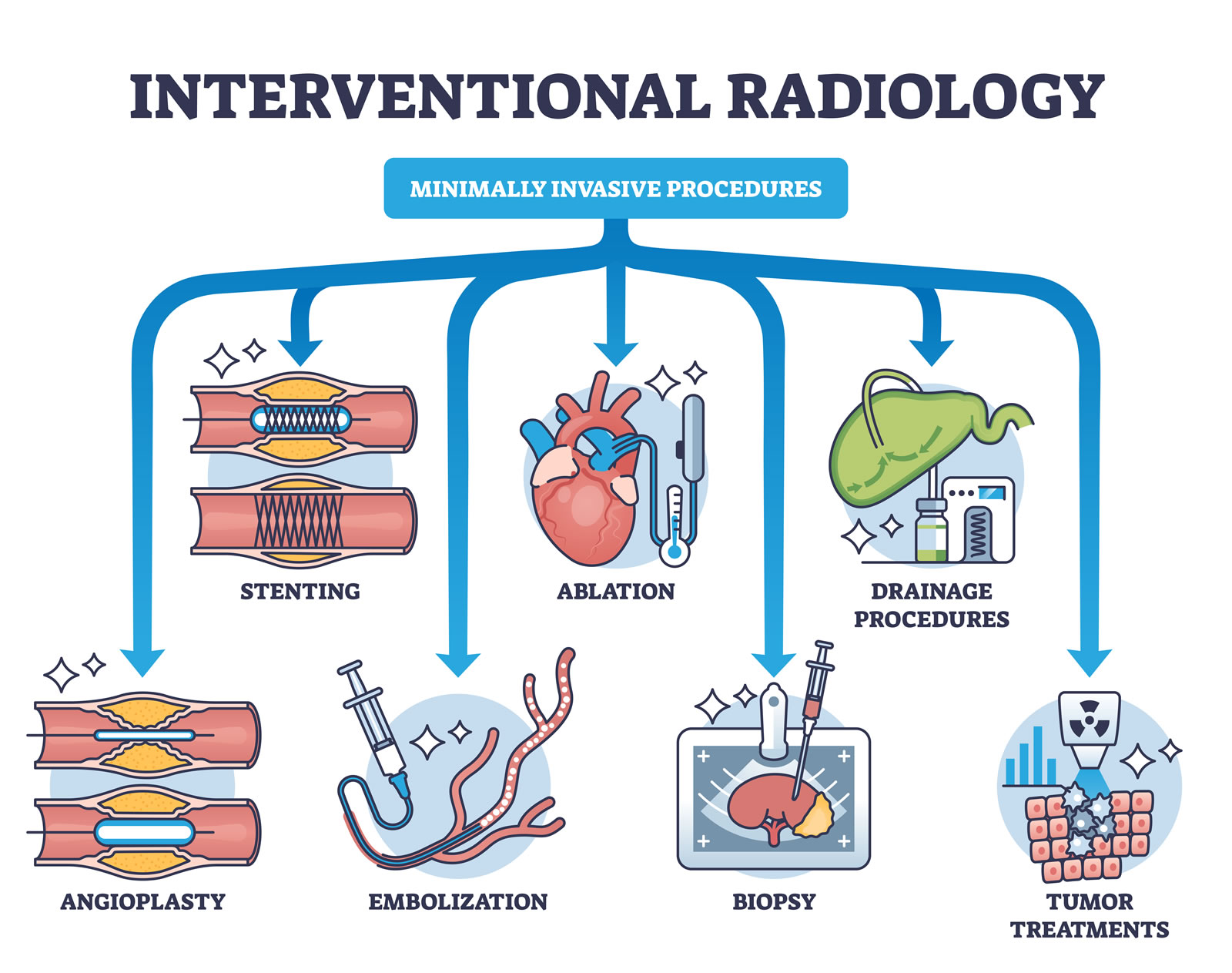
Pediatric Interventional Radiology (PIR) is a subspecialty that involves using imaging techniques, such as X-rays, ultrasound, CT scans, and MRIs, to guide minimally invasive procedures for the diagnosis and treatment of various medical conditions in children. These procedures offer advantages over traditional surgery, such as smaller incisions, reduced risk, shorter recovery times, and less pain.
Here are some common procedures performed in Pediatric Interventional Radiology:
1. Pediatric Biopsy
- Indications: Used to obtain tissue samples for the diagnosis of cancers, infections, or inflammatory conditions in children.
- Procedure: Under imaging guidance (typically ultrasound or CT), a needle is inserted into the target area (e.g., a mass or abnormal tissue) to extract a sample.
- Benefits: Minimally invasive and can provide a diagnosis without the need for open surgery.
2. Percutaneous Drainage of Abscesses
- Indications: Treatment of abscesses, fluid collections (like hematomas or bile collections), or infections in organs such as the liver, lung, or kidney.
- Procedure: A catheter or drainage tube is placed through the skin into the fluid collection area under imaging guidance to drain the fluid.
- Benefits: Avoids surgery, promotes quicker recovery, and reduces the risk of infection.
3. Vascular Access Procedures
- Indications: For obtaining intravenous (IV) access for long-term medication administration, including chemotherapy, parenteral nutrition, or dialysis.
- Procedure: Involves placing central venous catheters (e.g., PICC lines or tunneled central lines) or ports, typically under ultrasound or fluoroscopic guidance.
- Benefits: Provides reliable and safe access for prolonged treatment.
4. Embolization
- Indications: To stop bleeding (e.g., after trauma or surgery), treat vascular malformations (e.g., arteriovenous malformations), or control tumors’ blood supply.
- Procedure: Small particles, coils, or other embolic agents are delivered through a catheter into the blood vessels supplying the target area to block blood flow.
- Benefits: Minimally invasive and can often avoid surgery or a blood transfusion.
5. Balloon Angioplasty
- Indications: Used to treat vascular stenosis or narrowing of blood vessels, often in cases of congenital heart defects or stenosis due to disease (e.g., aortic coarctation).
- Procedure: A balloon catheter is inserted through the skin into the narrowed blood vessel, and the balloon is inflated to widen the vessel.
- Benefits: Minimizes the need for more invasive surgical treatments.
6. Shunt Insertion
- Indications: Treat hydrocephalus (accumulation of cerebrospinal fluid in the brain) or other conditions requiring the diversion of fluid (e.g., peritoneal dialysis).
- Procedure: A catheter or tube (shunt) is inserted to redirect fluid from one area to another (e.g., from the brain to the abdomen).
- Benefits: Minimally invasive compared to traditional surgery and allows for the management of fluid buildup.
7. Biliary Interventions
- Indications: Treatment of biliary obstructions or conditions such as biliary atresia or choledochal cysts in pediatric patients.
- Procedure: Stents or drains are placed in the bile ducts to restore bile flow, or balloon dilatation is performed to open up obstructed ducts.
- Benefits: Avoids surgery and helps manage biliary conditions effectively.
8. Nephrostomy
- Indications: Treatment of obstructed kidneys or hydronephrosis, where urine cannot flow properly from the kidney to the bladder.
- Procedure: A catheter is placed into the kidney through the skin under imaging guidance to drain urine and relieve pressure.
- Benefits: Reduces the need for open surgery and provides relief in urgent situations.
9. Vertebroplasty or Kyphoplasty
- Indications: Treatment of vertebral fractures, particularly in cases where there is bone weakening (e.g., from a tumor or metabolic bone disease).
- Procedure: A needle is inserted into the vertebra to inject bone cement, stabilizing the fracture and relieving pain.
- Benefits: Minimally invasive and effective for pain relief and structural stabilization.
10. Percutaneous Gastrostomy Tube (PEG) Insertion
- Indications: For feeding children who cannot eat orally due to neurological or gastrointestinal conditions.
- Procedure: A feeding tube is inserted directly into the stomach through the skin under imaging guidance.
- Benefits: Enables children to receive proper nutrition without the need for surgery.
11. Spinal Procedures
- Indications: Treatment of vertebral abnormalities, such as spinal arteriovenous malformations or tumors.
- Procedure: Under imaging guidance, a needle or catheter is used to deliver embolic agents or perform drainage, often providing a minimally invasive alternative to surgery.
- Benefits: Reduces the need for open surgery, and provides faster recovery.
12. Tunneled Catheter Placement for Dialysis
- Indications: For children requiring long-term dialysis due to kidney failure.
- Procedure: A catheter is inserted under the skin and into a central vein, providing access for dialysis without the need for frequent needle insertions.
- Benefits: Improves the quality of life for children undergoing chronic dialysis.
13. Radiofrequency Ablation (RFA)
- Indications: Used to treat tumors, particularly those that are not amenable to surgery (e.g., liver or renal tumors).
- Procedure: A needle-like probe is inserted into the tumor under imaging guidance, and radiofrequency energy is used to heat and destroy the tumor tissue.
- Benefits: Minimally invasive and can effectively treat certain types of tumors without the need for traditional surgery.
14. Angioplasty & Stenting
- Angioplasty and vascular stenting are procedures often used to treat peripheral artery disease.
- These procedures involve using a balloon to widen a narrowed or obstructed blood vessel,
- If necessary, placing a stent to keep the vessel open.
15. Fistula and Stenosis Treatment (in Biliary or GI Systems)
- Indications: Treatment of abnormal connections (fistulas) or narrowing (stenosis) in the biliary or gastrointestinal systems.
- Procedure: Procedures may include balloon dilation, stent placement, or coil embolization, performed under imaging guidance.
- Benefits: Can correct problems without major surgery.
Key Advantages of Pediatric Interventional Radiology:
- Minimally invasive: Smaller incisions or no incisions, reducing trauma to the child.
- Faster recovery: Shorter hospital stays and quicker return to normal activities.
- Reduced pain: Less pain than traditional surgery, and often fewer complications.
- Improved outcomes: For many conditions, PIR can provide the same or better results than surgery, but with fewer risks.
Safety Considerations:
- Radiation Exposure: As with any interventional radiology procedure, careful management of radiation exposure is essential, especially for pediatric patients. The use of shielding and optimized imaging protocols helps minimize risk.
- Anesthesia and Sedation: Some procedures require general anesthesia or sedation, and careful monitoring is essential, particularly for young children.
- Complication Management: Though PIR is minimally invasive, risks such as bleeding, infection, and organ damage must still be considered.
Pediatric interventional radiology is a growing field that plays a crucial role in providing less invasive, more effective treatments for children with a wide range of conditions. The goal is always to provide the best care while minimizing the physical impact of medical interventions.
Interventional radiology is used in a broad array of medical fields, including cardiology, oncology, gastroenterology, and urology, and is increasingly becoming a first-line option for managing various conditions.